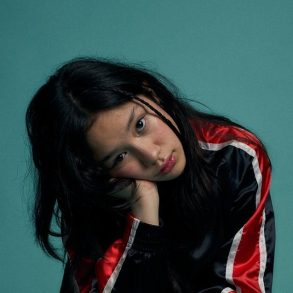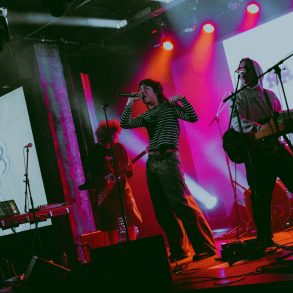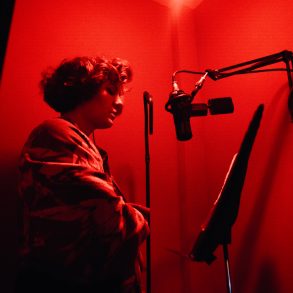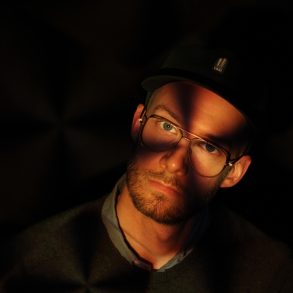


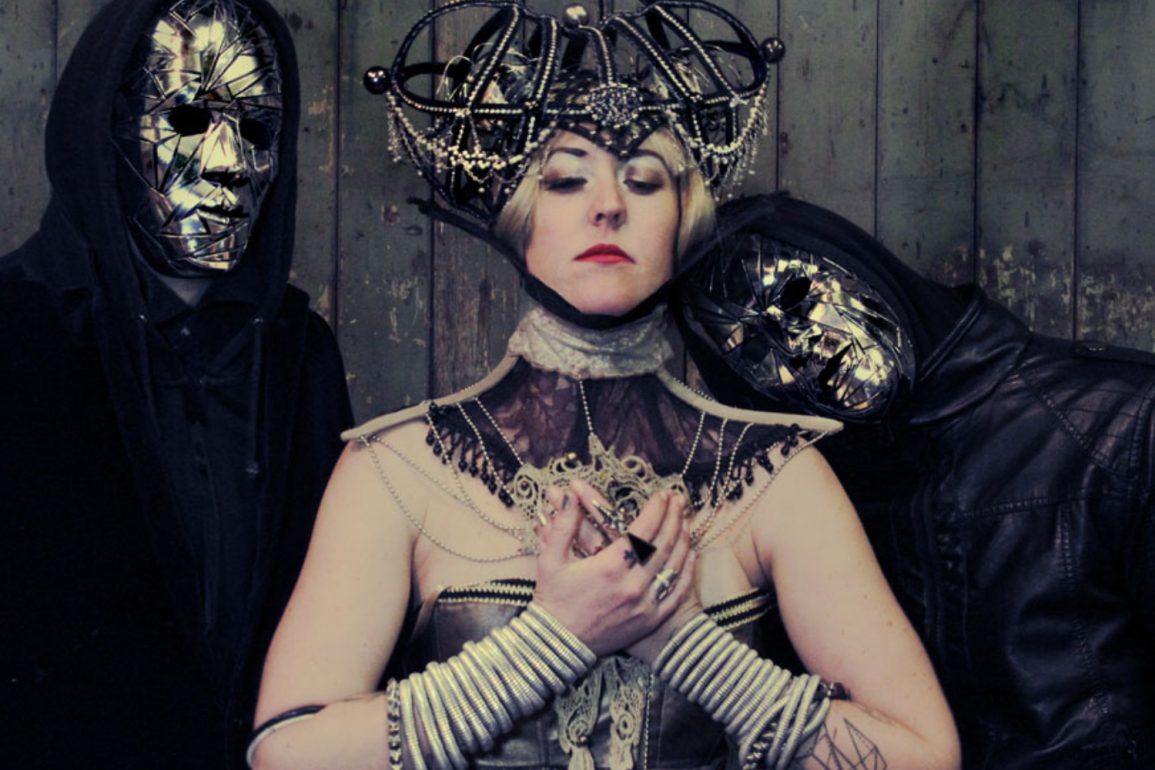
Lunar & The Deception is a London-based band with South African roots that has become a standout in indie rock, dream pop, darkwave, and neo-psychedelia. Their sound has drawn comparisons to Portishead, Evanescence, and Esben & The Witch, while also showing influences from Led Zeppelin, Radiohead, and Tool. The group is led by Britt Xyra Dusk, whose powerful vocals and unique costume designs bring to mind ancient deities and tribal mystics. The band also includes percussionist Hedge Seel, dub producer Thomas Hammond, and sound engineer Greg Chapter. They have received praise such as Artist of the Week at Richer Sounds and a 9/10 review from Powerplay Magazine. Their live shows include supporting Pussy Riot at Glastonbury Festival, playing venues across London, and performing at the 2022 Sync Summit Music Conference. Their new single, ‘Your Monsters,’ co-produced with Michael Rendall (The Orb, Peter Murphy, Killing Joke), was released on February 3rd, 2026, ahead of their album The Somnambulist on March 6.
In the interview below, Britt Xyra Dusk and the band share the stories behind their latest music, their creative journey, and what’s next for them.
How did the diverse backgrounds from South Africa to Oxfordshire countryside and Southeast Asian travels, first bring the members of Lunar & The Deception together to form the band?
Britt came over from Durban to London in 2015 where she met Greg, Tom & Hedge on the music and festival circuit. Hedge was already playing in the Rave-Metal/Prog band TRIBAZIK, whose sound was built on tribal rhythms & percussion. Britt had already written lots of songs ideas and lyrics so the group started experimenting with synths, percussion and obscure instruments to create a foundation that was influenced by a huge array of artists and genres from around the globe and that the band members had discovered from various travels, growing up in South Africa and exposure on the UK music scene – these included; 60s/70s/ Rock, New Wave, Electro, Metal, Folk, Traditional and World Music .
Britt, what drew you from South Africa to London, and how do your roots there still shape the stories you tell through your songwriting and stage presence?
I started out with a career in Fashion and Costume design, I had my own clothing label in Cape Town and really wanted to branch out and London seemed the best place for art, fashion and music. I will always honour my South African roots which I’m extremely proud of. I’m fascinated by African culture, anthropology & folk tales. This will always come through in the things that inspire me to write, create lyrics and music. In terms of stage presence, I love dressing up so luckily this collided with my stage looks and it all seems to blend seamlessly.
Hedge, how did growing up near the Rollright Stones and travelling through India and Southeast Asia influence the rhythmic foundation you bring to the band’s sound?
I have always been fascinated by megaliths and there are plenty scattered across the Oxfordshire countryside where I grew up. This interest led me to research ancient civilisations and cultures. At the same time, I also became fascinated in music from around the world and was inspired by many artists from Mali, Ghana, Turkey, Egypt & India. When I had the opportunity to travel, I started to collect various percussion instruments. I specifically went to Tamil Nadu in India to find a Thavil drum (a barrel-shaped, double-headed drum used in Carnatic music & temple rituals) and have also built up a collection of other percussion instruments including Djembe (Africa), Darbuka (Egypt), Sabar (Africa), Dumbek (Turkey). All these instruments add their own unique sound (both individually & layered) to various tracks on the album. ‘The Great Bison‘ includes quite a few of these and when multi-tracked and arranged together help progress the song to its driving climax.
Your music pulls from legends like Led Zeppelin, Radiohead, and Tool while earning comparisons to Portishead and Evanescence; which artists feel most alive in your creative process right now?
Our sound is quite progressive, but also brings in elements of electronica, glitches and rock. We never copy styles from anyone, these are just comparisons for the sound.
Britt, your costume designs draw on ancient deities, prophetic sorcerers, and tribal warriors, how do you decide what visual world each live show or release should inhabit?
I’m really lucky that I am a super visual person and creating visuals comes really naturally and easily to me. I’m so glad that I don’t have to outsource that element of the creative process. It’s super helpful that I have visions for each song, sometimes it starts with a colour or it can be what the song is about lyrically. For example, our song ‘Eclipse’ is ultimately inspired by an owl which is a symbolic spirit guide for humanity, so I made an owl mask out of found objects which I’ve used in the music video and also whenever we perform that song, I wear the mask too.
So, it’s usually an item or a look for each song that gets carried through into the creative process. ‘Your Monsters‘ has a really strong feel of an internal battle, which led to imagery of people riding horses at night with lanterns into battle.
Can you walk us through the moment the band first knew ‘Your Monsters’ was the right lead single for The Somnambulist?
‘Your Monsters‘ is the only love ballad on the album. We feel it is the most relatable of all the songs. All the songs are different with completely different themes. This felt like a good place to start and introduce our style of music to the world.
The song balances tender piano and haunting vocals with crushing guitars and cinematic strings; how did you and co-producer Michael Rendall shape that dramatic journey from quiet urgency to anthemic release?
From the off, the delicate piano, soft cello and opening lyrics all naturally demonstrate that there is a ‘call-to-arms’ – the song asks the listener to prepare to take action as if preparing to go into battle. These elements are then followed by punctuated stabbing drums & bass which build up tension and drama accentuated by the padded synths. Michael Rendall thought it was important to raise this intensity further (to both the bridge and final choruses), so we layered braam-like low frequency horns (often synonymous with modern action cinema trailers) and multi-layered strings to give it extra dramatic weight and vigour as an underbelly to balance the uplifting, splayed guitars that drive the whole song.
You’ve described ‘Your Monsters’ as laying bare the beauty and brutality when passion turns to conflict – what personal experiences or observations fed into that exploration of love’s darker forces?
The song was inspired by how you can love someone but also that same love, can open up the capacity to be filled by frustration, rage and pain. Love is not always pretty, perfect or beautiful, it also contains a space for growth and a place to unleash ‘Your Monsters’.I don’t mean malevolence or violence – but allowing yourself and your partner to also explore the shadow side of love.
I love the Kahlil Gibran poem “On Joy and Sorrow” from his seminal work The Prophet, the central idea is that joy and sorrow are dual, inseparable and deeply interconnected—joy is not the opposite of sorrow, but rather sorrow “unmasked.”
‘The same emotional well that produces laughter has often been filled with tears. The deeper sorrow carves into you, the more joy you can contain: Pain shapes the soul to hold greater joy, much like a cup must be fired in a kiln to hold wine, or a lute must be hollowed with knives to produce music.
They are not rivals but partners: One cannot exist without the other.’
Given your history of activism and powerful live moments like backing Pussy Riot at Glastonbury, how do you navigate bringing political or social fire into music without letting it overshadow the emotional core?
I feel like everything is political, and I think it is really bizarre for people to say they don’t engage in politics or have no interest in the news. I think it’s everyone’s duty to get involved with politics and the details of who is in charge.
Politics & Infrastructure affects everything in your daily life, from your rubbish collection, right down to your freedom to travel or protest. I think it’s feeble and very over-privileged for people to say they are unaffected by politics and governance. Also on the same page, no one wants to be shouted at, so I think protest is the most effective when done softly, subtly and gently. It’s very effective when communicated through art and music. Music gives you a voice so it is important to have something to say. Artists have been using music as a vehicle of protest and self-expression for thousands of years.
With The Somnambulistarriving in March, what’s the one thing you’re most excited for fans to discover when they finally hear the full album?
I really want people, when they hear the album in its entirety, to go on a journey. Each song is very stylistically different and takes you to different places. I’m really hoping people will listen to the album as a whole – hopefully purchase the CD or vinyl and not just listen to individual songs on streaming platforms, each song makes up a piece of the journey as an entirety (like planets make up a solar system) and I hope it will be consumed that way.
The Somnambulist is out on March 6th via X-Ray Sound. Check out the band’s bandcamp and pre order the LP – HERE
Stream ‘Your Monsters’:
Follow Lunar & The Deception:
Instagram – Facebook – Linktree – Bandcamp – Soundcloud – TikTok – Youtube – Spotify